Best Yarn for Beginners: What to Buy for Your First Crochet Projects
The yarn you learn with decides how frustrating your first week is. Here is what to buy, what to avoid, and why a light-colored worsted acrylic or cotton is the right first ball.

The right first yarn does one thing above all else: it lets you see your stitches. Most beginner frustration is not about the hands; it is about not being able to tell where the next stitch goes. A yarn that shows every V clearly turns a confusing tangle into something you can read.
Here is what to buy, what to skip, and how to make the choice in the shop.
The Short Answer
Buy a 100 g ball of smooth, worsted weight (category 4) yarn in a light, solid color, either acrylic or cotton, and a 5.0 or 5.5 mm hook. Total cost is about the price of a sandwich. That is the whole shopping list.
Why Worsted Weight
Worsted is thick enough that each stitch is easy to see and insert into, and thin enough that the hook still feels precise. Thinner yarns like DK and fingering make small stitches that are hard to find. Bulky yarns feel fast and satisfying, but the hook is chunky and beginners struggle to keep an even tension with big loops.
Every beginner tutorial, most free patterns and the entire dishcloth genre assume worsted. Learn on it and everything lines up.
Why a Light, Solid Color
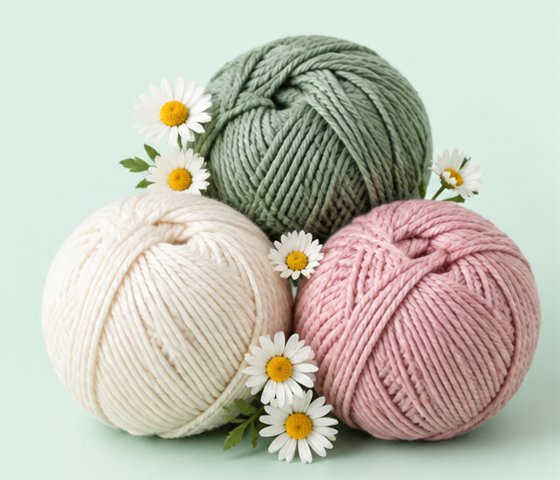
Dark yarn swallows the stitch definition; black is nearly impossible to learn on. Variegated and self-striping yarns look fun but the color changes disguise where one stitch ends and the next begins. A pale solid, cream, light blue, soft yellow, mint, shows each stitch with a little shadow beneath it, so the anatomy of the fabric is visible.
You can go dark and wild on the second project.
Acrylic vs Cotton for Learning
Acrylic
- Cheapest option and available everywhere.
- Soft with a slight stretch, so tight stitches are easier to work into.
- Machine washable.
- Downside: cheap acrylic can be squeaky or split. Spend slightly more for a mid-range brand and it feels much nicer.
Cotton
- Excellent stitch definition; the Vs are crisp and obvious.
- Makes an immediately useful first project: a dishcloth or washcloth.
- No stretch, which makes tight stitches harder to get into, so keep your tension relaxed.
- Slightly heavier on the hands during long sessions.
Both are fine. If you want the softest, cheapest learning experience, acrylic. If you want your first hours of practice to produce something you will actually use, cotton.
What to Avoid at First
- Fuzzy, eyelash and mohair yarns. The halo hides everything.
- Chenille and velvet. They split, shed, and worm out of the fabric.
- Boucle. Loops everywhere; the hook catches on all of them.
- Very thin yarn. Hard to see, slow to grow.
- Superwash wool with a lot of twist. Not bad, just slippery and pricey for practice.
- Bargain-bin mystery yarn. Often splits into plies with every stitch.
- Anything dark.
Read the Label Before You Buy
Look for four things:
- Weight category 4 (medium / worsted / aran / 10 ply depending on where you live).
- A recommended hook size near 5 mm. If it says 4 mm you are looking at DK; if it says 6.5 mm and up you are in bulky territory.
- Fiber content of 100 percent acrylic or 100 percent cotton, or a simple blend of the two.
- Meterage. Around 170 to 220 m per 100 g is normal for worsted.
A Note on Hooks
The hook matters almost as much as the yarn. A basic aluminum hook works, but an ergonomic hook with a soft handle stops your hand cramping and is worth every cent, especially in the first weeks when you will grip too hard. Get one in 5.0 mm and one in 5.5 mm; a slightly larger hook loosens tight stitches instantly.
Your First Three Projects, in Order
- A swatch. Chain 15, work rows of single crochet until you can keep the stitch count for 10 rows. This is not a waste; it is where your hands learn.
- A cotton dishcloth. Chain 31, 30 rows of single or half double crochet, a border of single crochet. Useful, fast, and it drills the stitch a few hundred times.
- A simple scarf. Chain 22, double crochet rows until it is long enough. Two balls of worsted acrylic. You will be a crocheter by the end of it.
When to Move On
After two or three projects in light worsted, try a DK yarn for a hat, a bulky yarn for a quick blanket, or a wool blend for a scarf you will love wearing. By then your hands know where the stitches are, and the yarn no longer needs to show you.
Frequently asked questions
What is the easiest yarn to crochet with?
A smooth, light-colored worsted weight acrylic or cotton. Smooth so the hook does not catch, light so you can see each stitch, and worsted because the stitches are big enough to see but not so big that the hook feels clumsy.
Should beginners use acrylic or cotton?
Either is a good choice. Acrylic is cheaper, softer, and more forgiving of tension. Cotton shows stitch definition better and makes a useful first project like a dishcloth. Avoid wool blends with a halo and anything fuzzy until your hands know the stitches.
What yarn should I avoid as a beginner?
Dark colors, black especially. Fuzzy or eyelash yarns. Chenille and velvet yarns that split and shed. Very thin yarn. Boucle. Cheap yarn that splits into strands as you work. Anything with a texture that hides the stitch.
How much yarn do I need for my first project?
One 100 g ball of worsted weight, roughly 170 to 200 meters, is enough for a dishcloth, a swatch or two, and a small pouch. Buy two of the same color if you want to make a scarf.
Keep reading
More in Yarn Guides →-
Cotton vs Acrylic vs Wool Yarn: Which One for Which Crochet Project?
The three yarn fibers you will use most, compared on warmth, drape, washability, cost and stitch definition, with a project-by-project recommendation.
-
Yarn Weights Explained: The Complete Chart From Lace to Jumbo
The 0 to 7 yarn weight system explained in plain English, with a chart of recommended hook sizes, gauge, common names by country, and which weight to pick for each kind of project.
-
Crochet Dishcloth Pattern: The Simple Cotton Cloth That Outlasts Every Sponge
A free crochet dishcloth pattern in cotton with three stitch options (single crochet, hdc and textured), sizing, a neat border, and care tips so it lasts for years.