Double Crochet Stitch (dc): The Complete Beginner Tutorial
Learn the double crochet stitch step by step, including the turning chain rule, how to keep your edges straight, and why this is the fastest stitch for blankets.

If single crochet is the workhorse, double crochet is the stitch that makes projects actually finish. It is roughly twice as tall, so a blanket grows twice as fast, and the fabric it makes has a soft, open drape that suits scarves, shawls and garments. It is also the base of the granny square and a hundred other classic motifs.
This tutorial uses US terminology. In UK patterns the same stitch is called treble crochet.
What You Need
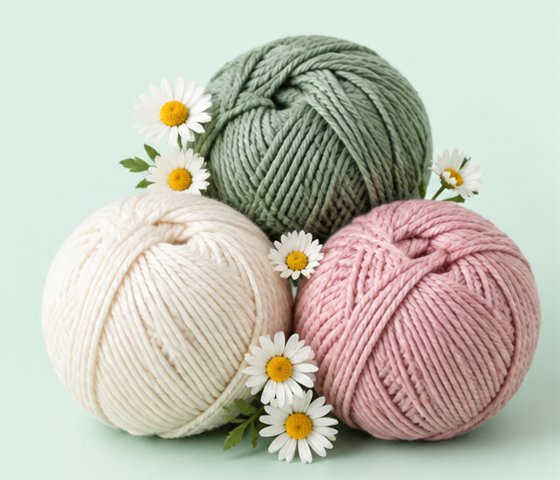
Worsted weight yarn in a pale color and a 5.0 mm or 5.5 mm hook. If you already have a single crochet swatch, keep it nearby; the comparison in height makes the double crochet click faster.
The Stitch, Step by Step
Chain 13 for a practice swatch.
- Yarn over before you insert the hook. This is the extra step that makes the stitch taller.
- Insert the hook into the fourth chain from the hook. The three skipped chains are your turning chain and count as the first stitch.
- Yarn over and pull through the chain. Three loops on the hook.
- Yarn over and pull through the first two loops. Two loops left.
- Yarn over and pull through the last two loops. One loop left. Done.
Repeat in every chain to the end. Count your stitches: you should have 10 double crochets plus the turning chain, so 11 stitches in total when the chain counts.
The rhythm in your head becomes: yarn over, insert, pull up, through two, through two. Say it out loud for the first row if it helps. Nobody is judging.
Turning Rows in Double Crochet
The turning chain is where double crochet confuses people, because it usually counts as a stitch.
- Chain 3 and turn.
- Skip the first stitch (the chain 3 is standing in for it).
- Double crochet into the second stitch and every stitch across.
- At the end of the row, work your last double crochet into the top of the turning chain from the previous row. It is the third chain of that chain 3 and it looks slightly different from a normal stitch, which is why people miss it.
Count: 11. If you consistently lose one stitch per row, you are missing the top of the turning chain. If you gain one, you are working into the first stitch when the chain already counts for it.
Some designers prefer a chain 2 that does not count, which leaves a tidier edge but changes the counting. When you write your own patterns, pick one convention and stick to it.
Why Double Crochet Fabric Behaves Differently
Because the stitch is tall, there is more space between the posts. That gives you:
- Faster growth. A blanket that would take 60 rows of single crochet takes about 30 rows of double.
- More drape. The fabric bends and swings, which is what you want in a shawl and do not want in a basket.
- Slightly less warmth. Air moves through it. For a heavy winter blanket, pair it with a thicker yarn or a denser stitch pattern.
- A visible gap at the row edges next to the turning chain. It is normal. A border hides it.
Three Useful Variations
Front post / back post double crochet (FPdc / BPdc). Instead of inserting the hook under the top loops, you work around the vertical post of the stitch below. Alternating them makes crochet ribbing and the raised cables you see on textured hats.
Double crochet in the back loop only (dc BLO). Produces a subtle horizontal line and a softer fabric.
Linked double crochet. The stitches are connected side by side, which removes the gaps and makes a solid fabric that still grows fast. Excellent for garments.
Fixing the Usual Problems
The first stitch of every row leans. The chain 3 is thinner than a real double crochet, so it leans. It is cosmetic. If it bothers you, learn the stacked single crochet start: two single crochets stacked on top of each other, which mimics a double crochet and looks straighter.
The edges are uneven in height. Your turning chain is too tight or too loose. Make it the same tension as the rest of your stitches, not tighter.
The whole piece is skewing into a parallelogram. Slight skew is normal in double crochet because each stitch leans a little to one side. Blocking straightens it. If it is severe, you may be adding a stitch at one end and dropping one at the other.
Practice Project: A One-Evening Scarf
Chain 22 with worsted yarn and a 5.5 mm hook. Work double crochet rows until the scarf is 150 cm (60 inches) long, roughly 75 to 85 rows. Fasten off, weave in ends, add fringe if you like. You will have made several hundred double crochets and the stitch will be in your hands for good.
From here, the granny square is a natural next step, since it is just clusters of three double crochets worked into chain spaces.
Frequently asked questions
Does the chain 3 count as a stitch in double crochet?
In most US patterns, yes. The chain 3 at the start of a row stands in for the first double crochet, so you skip the first stitch and work your next dc into the second stitch. Some modern patterns use a chain 2 that does not count. The pattern should tell you; if it does not, assume it counts.
Why are my double crochet edges wonky?
Usually because the turning chain is either counted or ignored inconsistently. If it counts, you must work into the top of it at the end of the next row. If you skip it one row and work into it the next, your stitch count changes and the edge wobbles.
Is double crochet or single crochet better for beginners?
Single crochet teaches the basic movement, but double crochet is more forgiving of uneven tension and grows much faster, which is motivating. Many beginners learn sc first and then find dc is the stitch they actually enjoy.
What is double crochet called in UK terms?
Treble crochet (tr). The UK naming is one step up from US naming for every basic stitch, which is why you should check a pattern's terminology before you begin.
Keep reading
More in Stitch Tutorials →-
Single Crochet Stitch (sc): How to Do It, Count It, and Fix It
A clear single crochet tutorial: the stitch step by step, how to turn rows without losing stitches, counting tips, and fixes for the mistakes every beginner makes.
-
How to Crochet for Beginners: A Complete Step-by-Step Guide
Learn how to crochet from absolute zero: choosing yarn and hooks, holding the hook, the chain stitch, single crochet, and your first easy project.
-
Half Double Crochet (hdc): The Stitch Most Beginners Skip and Shouldn't
Half double crochet is the best all-round stitch for hats, sweaters and blankets. Here is how to work it, how to handle the turning chain, and the third-loop trick that makes it look knitted.